Susceptor Heating
Susceptor heating refers to a technique where materials that are not electrically conductive may be heated using induction technology. An electrically conductive “susceptor” transfers heat to the material via conduction or radiation. The susceptor in this case can be anything from a metallic rod inserted inside of an object, to a metallic pipe with a fluid flowing through it. This is the same technique used in consumer-grade induction cooktops where the pan acts as the susceptor. The cooktop heats the pan via induction, which then transfers the heat to the food via conduction. This same concept will heat an almost infinite variety of materials at large or small scales.
Utilizing Conduction or Radiation for Heating
Fundamentally, susceptor heating uses the same mechanisms of conduction or radiation as other forms of heating. However, it still provides many distinct advantages. An electromagnetic field heats the susceptor itself. This means it is placed inside a magnetically permeable container with the coil on the outside. This can heat the material within a controlled atmosphere chamber with much more ease. Induction also allows the susceptor to heat up very rapidly leading to shorter pre-heat times. The ability of induction technology to heat any electrically conductive material means that there are more options of materials for the susceptor. This can be especially important in chemical processes where the susceptor must not react with the heated material.
This technique opens the door for induction technology to be utilized in a wider variety of applications. These applications include Gasification, vaporization, steam generation, cooking, pasteurization, and more. Industries such as food & beverage, chemical production, electronics, glass, plastic, rubber, etc. have found many advantages to susceptor heating.
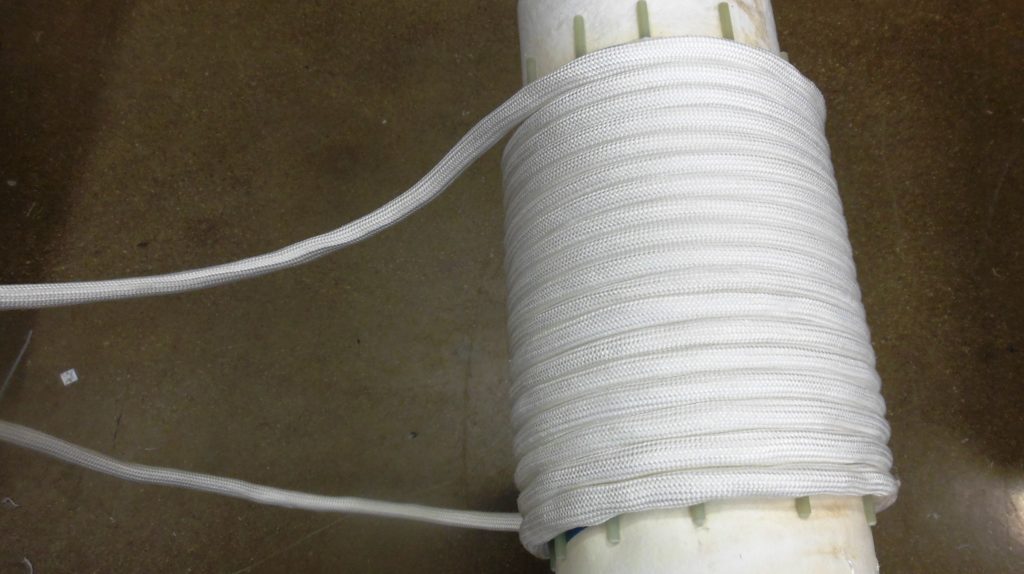
Pictured above is a great example of Radyne equipment used in a practical application of susceptor heating. A flexible induction coil is wrapped around a pipe used to transport semi-processed biomass. In order to prevent blockages, the biomass needs to be kept at an elevated temperature. The induction coil heats the pipe which transfers heat to the biomass flowing through it. An advantage of heating the pipe with induction is that the pipe can be insulated while the induction coil remains on the outside. The insulation facilitates more efficient and even heating of the pipe while the induction coil being on the exterior makes maintenance much easier. The insulation does not affect the efficacy of the induction heater because the electromagnetic field is able to permeate through it and heat the pipe directly.
Industries for Susceptor Heating Applications
Susceptor heating applications are common in these industries:
- Industrial Food & Beverage Processing
- Chemical Processing
- Biomass and Biofuel Processing
- Research & Education